
WELCOME BONUS 300%
UP TO €2000 + 100
FREE SPINS
UP TO €2000 + 100
FREE SPINS
Home → Blackjack
Blackjack at Frumzi Casino: Variants, Rules and Payouts
Card Counting at Shuffle Master Table: why it fails
The Shuffle Master system, often employed in online blackjack variants like those found at Frumzi Casino, shuffles cards after each hand. This continuous shuffling effectively resets the deck, making it impossible for card counting strategies to gain an advantage. Standard blackjack typically uses multiple decks, with shuffling occurring less frequently, allowing a running count to track the ratio of high to low cards.
Traditional card counting relies on deviations from a neutral count to predict favorable or unfavorable situations. With a Shuffle Master, the True Count remains consistently zero, negating the predictive power derived from tracking removed cards. This makes strategies that adjust bets based on a positive True Count, such as increasing bets when the True Count is +3 or higher, ineffective.
For players seeking an edge, the constant shuffling by the Shuffle Master negates any benefit from tracking cards. The Blackjack Insurance side bet, which pays 2:1, becomes less favorable when the house edge is already high at 7.47%. This is further amplified by the fact that a positive True Count for insurance is rarely achievable in a continuously shuffled game.
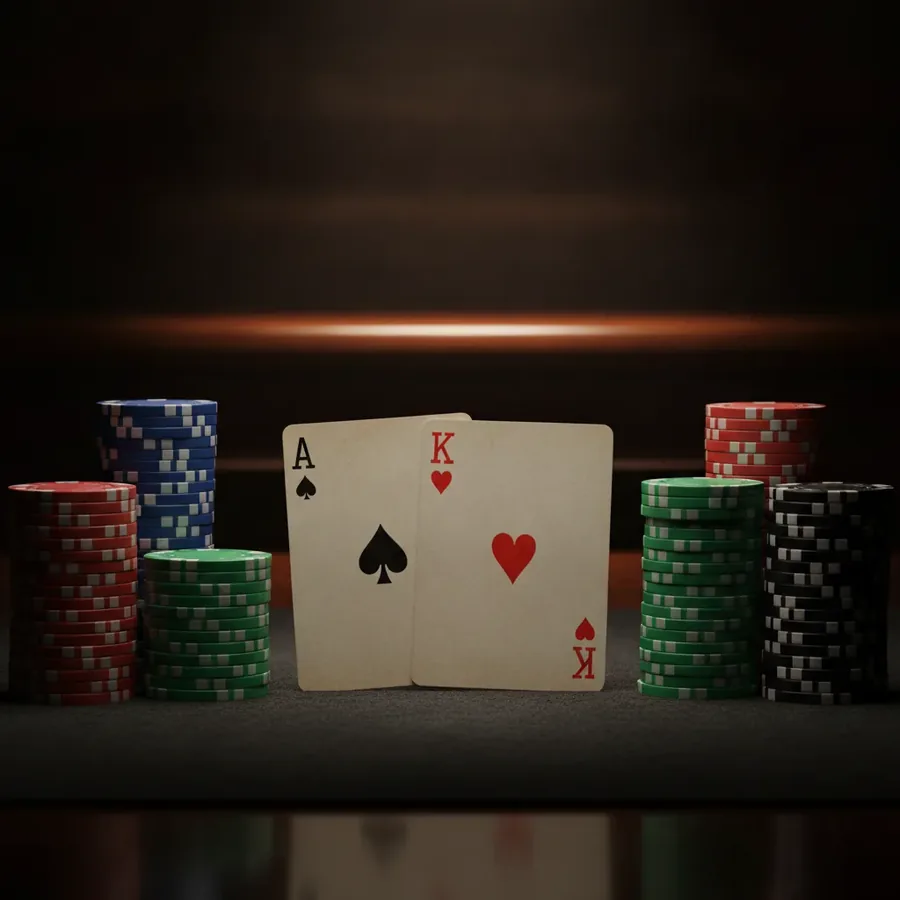
16 vs 10 played incorrectly: most common error
A frequent mistake in blackjack occurs when a player holds a total of 16 and chooses to hit against the dealer showing a 10. This decision is statistically unfavorable, as the probability of busting is high. According to basic strategy, hitting a 16 against a dealer's 10 is typically advised only in specific circumstances, often within games with more than six decks.
In a standard six-deck game with a 3:2 blackjack payout and liberal rules, the house advantage is approximately 0.46%. However, deviating from basic strategy, such as incorrectly hitting a 16 against a 10, can significantly increase this house edge. The RTP for such a game, played optimally, is 99.54%, but errors diminish this.
The consequence of this common error is a direct increase in the house's advantage, reducing the player's expected return. For a €10 bet, making this mistake repeatedly can lead to substantial losses over time, impacting the overall RTP. Therefore, adherence to basic strategy is crucial for maintaining the lowest possible house edge.
What doesn't count as Blackjack after Split?
When a player splits a pair of Aces in blackjack, the resulting hands are often subject to specific rules regarding what constitutes a 'blackjack'. In many variations, including those found at Frumzi Casino, an Ace and a ten-value card dealt immediately after a split do not count as a natural blackjack. Instead, they are treated as a total of 21.
This distinction is critical for payouts. A natural blackjack typically pays 3:2, whereas a 21 formed by splitting and then drawing a ten-value card may only pay 1:1. For example, in a game with a 3:2 payout, a natural blackjack on a €10 bet yields €15, while a 21 after a split might only pay €10.
Games with a 6:5 blackjack payout, like the 'Blackjack Auszahlung 6:5' variant, already reduce the return on a natural blackjack to €12 on a €10 bet. The rule that a split Ace combined with a ten-value card does not count as a natural blackjack further diminishes potential winnings in such scenarios, increasing the house advantage by approximately 1.39%.
Splitting costs double bet: plan budget
In blackjack, the act of splitting a pair requires the player to place an additional bet equal to their original wager. This means that a single hand can effectively double its stake as soon as a split is performed. For instance, if a player bets €10 and decides to split a pair, their total bet for that round increases to €20.
This rule necessitates careful budget planning, especially when playing games with potentially higher stakes or during longer gaming sessions. Considering that some live blackjack tables, like Lightning Blackjack, allow bets from €1 up to €2,500, splitting Aces on a maximum bet would immediately double the outlay to €5,000.
Understanding this rule is crucial for managing funds and avoiding unexpected expenditure. For example, if a player has a budget of €100 and plays with €10 bets, splitting a pair would consume €20 of their budget for that hand, leaving €80 for subsequent plays.
Blackjack Party runs with two hosts
Blackjack Party, a live dealer variant offered by Evolution, distinguishes itself with a lively atmosphere featuring two hosts. This dual-host format creates a more interactive and engaging experience for players, deviating from the more traditional single-dealer setup. Bets on this table can range from €1 to €1,000.
The presence of two hosts contributes to the 'party' atmosphere, with hosts engaging in conversation and creating a social environment. This contrasts with other live blackjack offerings, such as Playtech's Quantum Blackjack Plus Live, which focuses on multipliers up to 1,000x on 21 combinations and RTP of 99.57%.
Players who enjoy a more dynamic and conversational gaming environment may find Blackjack Party particularly appealing. The combined bet limit of €1,000 per hand on this table ensures that a wide range of players can participate in this engaging, dual-host blackjack experience.
Blackjack variants at a glance
| Variant | Payout | House edge | Rule | Bet range |
|---|---|---|---|---|
| Blackjack 6 Decks, S17, DAS, DOA, Auszahlung 3:2, Basisstrategie | 99.54% | 0.46% | Dealer steht auf Soft 17; Verdopplung auf jeder Zweierkarte; Verdopplung nach Split erlaubt; keine Aufgabe. Basisstrategie ist für diesen Wert zwingend | Blackjack 3:2, normaler Gewinn 1:1, Insurance 2:1 |
| Blackjack Surrender (Late Surrender) – Regel-Effekt | n.a. (Regel-Modifikator) | −0.08 Prozentpunkte | Spieler gibt Hand nach Dealer-Blackjack-Prüfung auf, verliert die Hälfte des Einsatzes. Verbessert RTP um ca. 0.08 Prozentpunkte. Early Surrender ist wesentlich wertvoller (bis −0.6 Prozentpunkte), aber extrem selten. | Rückzahlung 50% des Einsatzes |
| Blackjack Insurance / Versicherung (6–8 Decks) | 92.53% | 7.47% | Separate Nebenwette bis 50% der Hauptwette, wenn der Dealer ein Ass hat. Basisstrategie schreibt IMMER Ablehnung vor (außer Karten zählen bei True Count ≥ +3). Bei einem Deck Vorteil ≈ 5.88% | Insurance 2:1 |
| Blackjack Ein Deck, klassische Regeln, 3:2 | 99.85% | 0.15% | Weniger Decks = niedrigerer Vorteil; ein Deck gibt ca. −0.48 Prozentpunkte gegenüber 8 Decks. Oft durch 6:5 Auszahlung kompensiert. | Blackjack 3:2, Gewinn 1:1 |
| Blackjack Split / Double / H17 – Regel-Effekte | n.a. (Regel-Modifikatoren) | H17 +0.22 Prozentpunkte; RSA −0.08 Prozentpunkte; DAS −0.14 Prozentpunkte | Dealer Hits Soft 17 verschlechtert RTP um 0.22 Prozentpunkte; Resplit Aces verbessert um 0.08 Prozentpunkte; Double After Split verbessert um ca. 0.14 Prozentpunkte; 6 Decks statt 8 – ca. 0.02 Prozentpunkte. | Double – Einsatz ×2 mit einer Karte; Split – bis 4 Hände; Ass-Split meist mit einer Karte. |
| Blackjack Auszahlung 6:5 statt 3:2 (6 Decks) | 98.15% | 1.85% | Ersatz von 3:2 durch 6:5 fügt exakt +1.39 Prozentpunkte zum Vorteil des Casinos hinzu – stärker als jede andere Regeländerung. Bei $10 Einsatz zahlt Blackjack $12 statt $15. | Blackjack 6:5, Gewinn 1:1 |
When can you increase your bet?
The Blackjack Liberal Vegas Strip variant permits doubling down on any two cards, and players can re-split hands. These specific rules contribute to a favourable RTP of 99.72%. The decision to double down or split is a strategic choice directly impacting the player's potential return on investment in this particular game.
In Blackjack 6 Decks, players can double down on any two cards and also double after splitting, a combination that aids in achieving an RTP of 99.54%. These rule modifications, while seemingly minor, offer more opportunities for favourable outcomes. The inclusion of these options within the game's structure is directly tied to its mathematical advantage for the player.
Blackjack Split / Double / H17 offers a house edge modification where doubling after split improves the RTP by approximately 0.14 percentage points. This rule allows for increased betting potential after a split hand has been dealt, directly impacting the player's ability to adjust their wager based on the emerging cards.
What a Natural Blackjack Practically Pays Out
A Natural Blackjack, achieved with an initial two-card hand totaling 21, typically pays out at odds of 3:2. For instance, a €10 bet on Blackjack Liberal Vegas Strip would return €25, including the original stake. This payout structure is a fundamental aspect of the game's reward system.
The Blackjack 6 Decks variant, featuring a 3:2 payout for a natural blackjack, provides a standard return on winning hands. A €10 bet, when resulting in a blackjack, yields €25. This payout ratio is a common standard in many blackjack variations, contributing to the game's overall appeal.
When the payout for a natural blackjack is adjusted to 6:5, as seen in one variant, the return is significantly reduced. A €10 bet would only yield €22, a €3 decrease compared to the 3:2 payout. This change increases the house advantage by precisely 1.39 percentage points.
Which hands are excluded from Surrender?
Late Surrender is a rule where a player can forfeit their hand after the dealer checks for blackjack, losing half their bet. This option, found in Blackjack Liberal Vegas Strip, improves the RTP by approximately 0.08 percentage points. The player's decision is made post-dealer inspection.
The Blackjack Split / Double / H17 variant allows for a Late Surrender option, where players can opt to give up their hand after the dealer has checked for blackjack. This rule provides a partial return of the stake. Late surrender is particularly valuable when facing unfavourable initial hands against a strong dealer upcard.
While Early Surrender, which allows players to surrender before the dealer checks for blackjack, is significantly more valuable (up to -0.6 percentage points RTP), it is noted as being extremely rare. The Late Surrender rule, therefore, represents the more commonly encountered form of this strategic option.
Early Surrender is removed from many tables
The rule modification regarding Early Surrender significantly impacts the house edge, with its absence increasing the house advantage. Early Surrender, if available, can reduce the house edge by as much as 0.6 percentage points. Its removal means players lose this strategic advantage.
Blackjack Liberal Vegas Strip offers a favourable combination of rules, including a potential Late Surrender option. However, the data indicates that Early Surrender is exceptionally rare across many blackjack variants. The distinction between early and late surrender is crucial for understanding player options.
The absence of Early Surrender from many tables means players cannot opt to forfeit their hand before the dealer checks for a blackjack. This rule offers a substantial benefit, reducing the house edge by up to 0.6 percentage points, and its removal limits strategic flexibility for the player.
What Percentage Does Blackjack Count Towards Bonus?
Blackjack, in its standard form, contributes 10% towards the wagering requirements of a bonus. For example, a €10 bet on blackjack would count as €1 towards the total turnover needed. This percentage is significantly lower than that of slot games.
The 300% welcome bonus up to €2,000 means that for every €1 deposited, a player receives €3 in bonus funds, up to a maximum of €2,000. To fulfil the wagering requirements, players must bet a certain multiple of the bonus amount, often x40.
With a 10% contribution rate for blackjack, a player aiming to clear a €1,000 bonus that requires 40 times wagering (€40,000 total turnover) would need to place €400,000 in blackjack bets. This calculation highlights the substantial wagering needed when playing table games with a lower contribution percentage.
Splitting tens costs expected value: better stand
Splitting ten-value cards in Blackjack, such as tens, nines, or face cards, is generally not advised as it reduces the expected value. While the "Blackjack Ein Deck" variant offers an RTP of 99.85% with a house edge of 0.15% under classic rules, splitting tens would deviate from optimal strategy. This deviation can negatively impact the return to player.
The house edge for a standard game with 8 decks is approximately 0.48 percentage points higher than a single-deck game, but this difference is often mitigated by payout rules. Splitting tens, however, is a tactical decision that directly impacts the player's hand strength and potential outcomes, often leading to a worse long-term expectation than standing.
Understanding such strategic nuances is crucial for maximizing potential returns at the Blackjack tables. Deviating from basic strategy by splitting tens can increase the casino's advantage, effectively lowering the player's RTP on that particular hand and contributing to the overall house edge.
Stand-on-17 Rule and Its Meaning for Players
The "Stand-on-17" rule, specifically where the dealer stands on Soft 17 (S17), is a favorable condition for players, lowering the house edge by approximately 0.22 percentage points. In a game like "Blackjack 6 Decks, S17, DAS, DOA, Auszahlung 3:2, Basisstrategie", this rule contributes to an RTP of 99.54% when basic strategy is employed.
Conversely, if the dealer hits on Soft 17 (H17), the house edge increases. This rule modification directly influences the probability of the dealer busting or achieving a higher total, thereby affecting the player's winning potential. Lower house edge means a higher RTP for the player over time.
Players aiming for optimal outcomes should seek tables with S17 rules. This seemingly minor adjustment in dealer rules can lead to a more favorable long-term playing experience, as the casino's inherent advantage is reduced, allowing for potentially better returns on wagers.
How long does a Live Blackjack round take?
Live Blackjack rounds, particularly those with a party atmosphere or multipliers, can vary in duration depending on the game's specific features and player interaction. "Blackjack Party" by Evolution, for instance, involves two hosts, suggesting a more interactive and potentially extended gameplay experience. Bets can range from €1.00 to €1,000.
Games like "Quantum Blackjack Plus Live" from Playtech offer multipliers up to 1,000x on three-card 21s, with an RTP of 99.57% at optimal strategy. The inclusion of such features, while enhancing winning potential, might not significantly alter the fundamental round duration compared to standard live Blackjack, which typically involves dealing and player decisions.
Lightning Blackjack, also by Evolution, features Lightning multipliers up to 25x on winning hands and accommodates an unlimited number of players, with bets from €1 to €2,500. While the core gameplay remains sequential, the emphasis on multipliers and speed could lead to faster decision-making and potentially quicker rounds, though the actual dealing time is consistent.
Double Down vs Simple Hit on 11
Doubling down on a total of 11 is a fundamental strategic move in Blackjack that generally increases expected value. In scenarios like "Blackjack 6 Decks, S17, DAS, DOA, Auszahlung 3:2, Basisstrategie", doubling down on 11 is part of the optimal strategy, contributing to the game's 99.54% RTP.
The decision to double down on 11 versus taking a simple hit is based on the dealer's upcard. Doubling down allows a player to double their bet in exchange for receiving exactly one more card. This aggressive play is advantageous when the player has a strong probability of achieving a high total (e.g., 18-21) and the dealer shows a weak card.
This strategic option, when applied correctly based on the dealer's visible card, offers a way to capitalize on favorable situations. Employing this tactic as part of basic strategy can reduce the house edge, thereby enhancing the player's theoretical return on investment.
Double Down after Split: which tables allow it
The ability to double down after splitting (DAS) is a rule that significantly benefits players by reducing the house edge. In the "Blackjack 6 Decks, S17, DAS, DOA, Auszahlung 3:2, Basisstrategie" game, the allowance of DAS contributes to a house edge of 0.46% and an RTP of 99.54%. This rule is a key factor in player-favorable blackjack variations.
Allowing players to double down after splitting improves the RTP by approximately 0.14 percentage points compared to tables where this is prohibited. This rule modification is particularly impactful when combined with other liberal rules, creating a more advantageous playing environment for the player by increasing betting opportunities in strong hands.
Players seeking tables with favorable rules should look for options that explicitly permit Double After Split. This feature, alongside other beneficial rules like three-to-two blackjack payouts and dealer standing on soft 17, contributes to a lower overall house advantage and a higher theoretical return for the player.
Contact
Live - online chat
Banking









Providers










Frumzi Casino 2026